
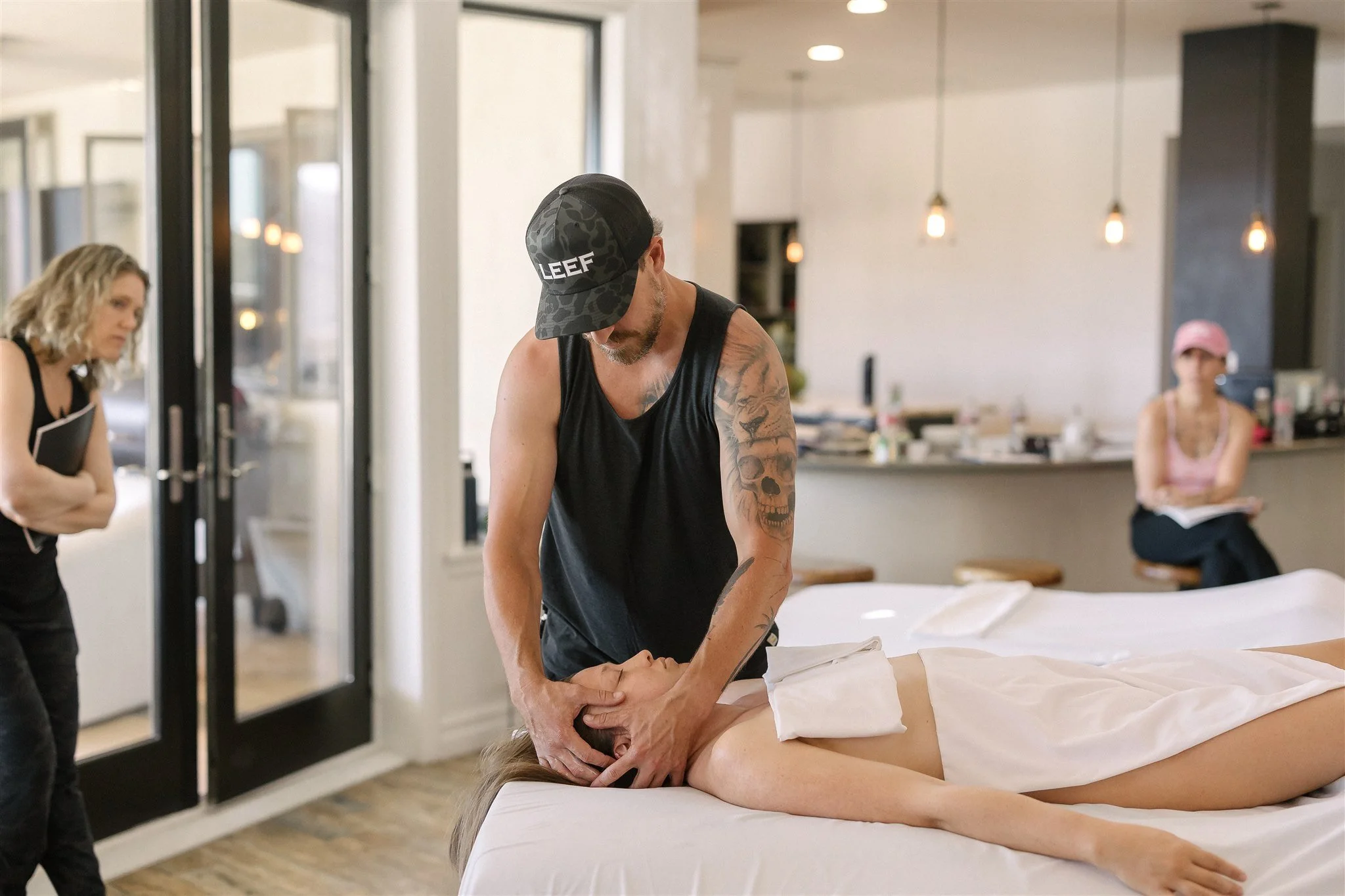
The Principles Behind the Method
THE LEEF METHOD
The LEEF Method is a connection-forward approach to massage — one where slow, flowing, nurturing touch meets strong, deep, intentional work.
At its core, the LEEF Method is built on a simple belief: that the most powerful thing a therapist can offer a client is not technique, but presence. Every stroke, every hold, every moment of stillness is an opportunity to communicate something that words cannot — that the person on the table is safe, seen, and worthy of care.
The LEEF Method moves differently than conventional massage. We work with the whole body in long, continuous strokes that travel its full length. We use bilateral movements that create a sense of symmetry and wholeness. We use minimal draping not to expose, but to allow — to give the therapist full access to the body as one connected system rather than a series of isolated parts. The work is more intimate than a typical deep tissue or Swedish massage, and more sensual in the truest sense of the word: it engages the senses, slows the nervous system, and invites the client into a deeper relationship with their own body.
The LEEF Method incorporates elements of energy healing and intentional stretching alongside deep tissue work. We pause. We hold. We breathe with our clients. We make space for whatever arises — including emotion, release, and stillness.
We believe that a massage session should feel like one unbroken experience. Not a checklist of techniques, but a journey with a beginning, a middle, and an end — one that the client carries with them long after they leave the table.
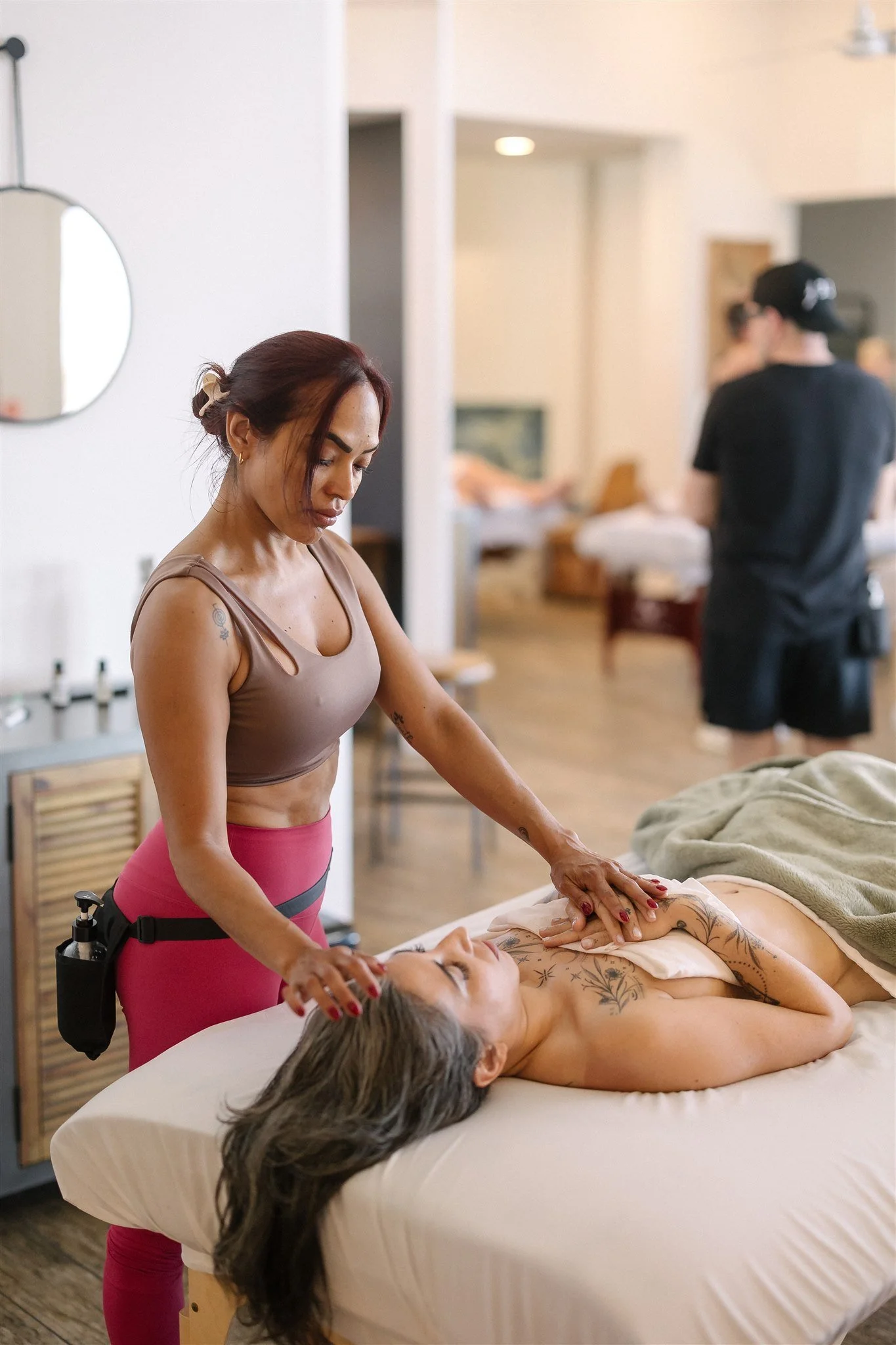
Presence Before Technique
The most powerful thing a therapist can offer is complete presence.
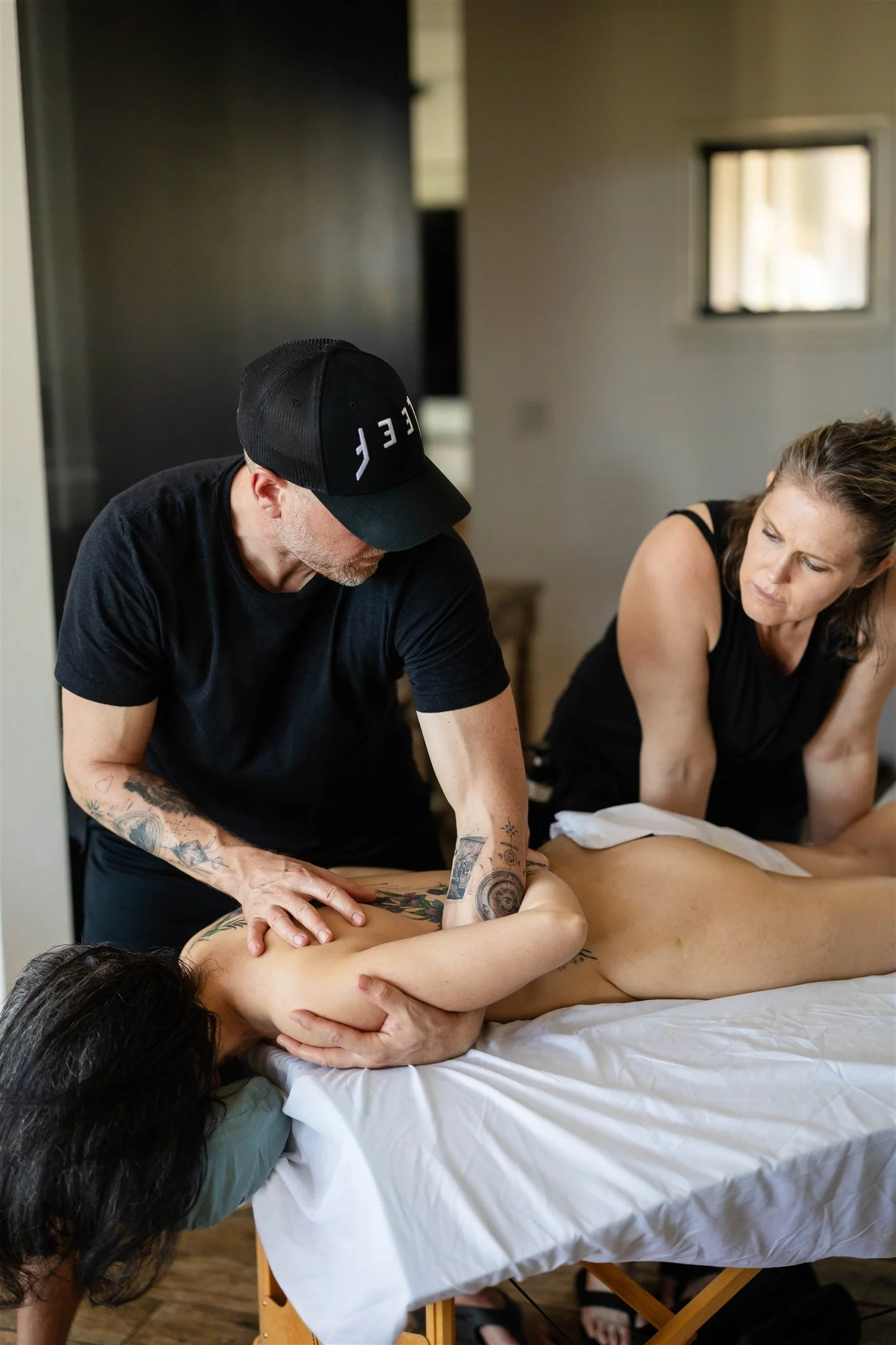
The Whole Body Approach
The body is treated as one connected system through long, continuous movements.
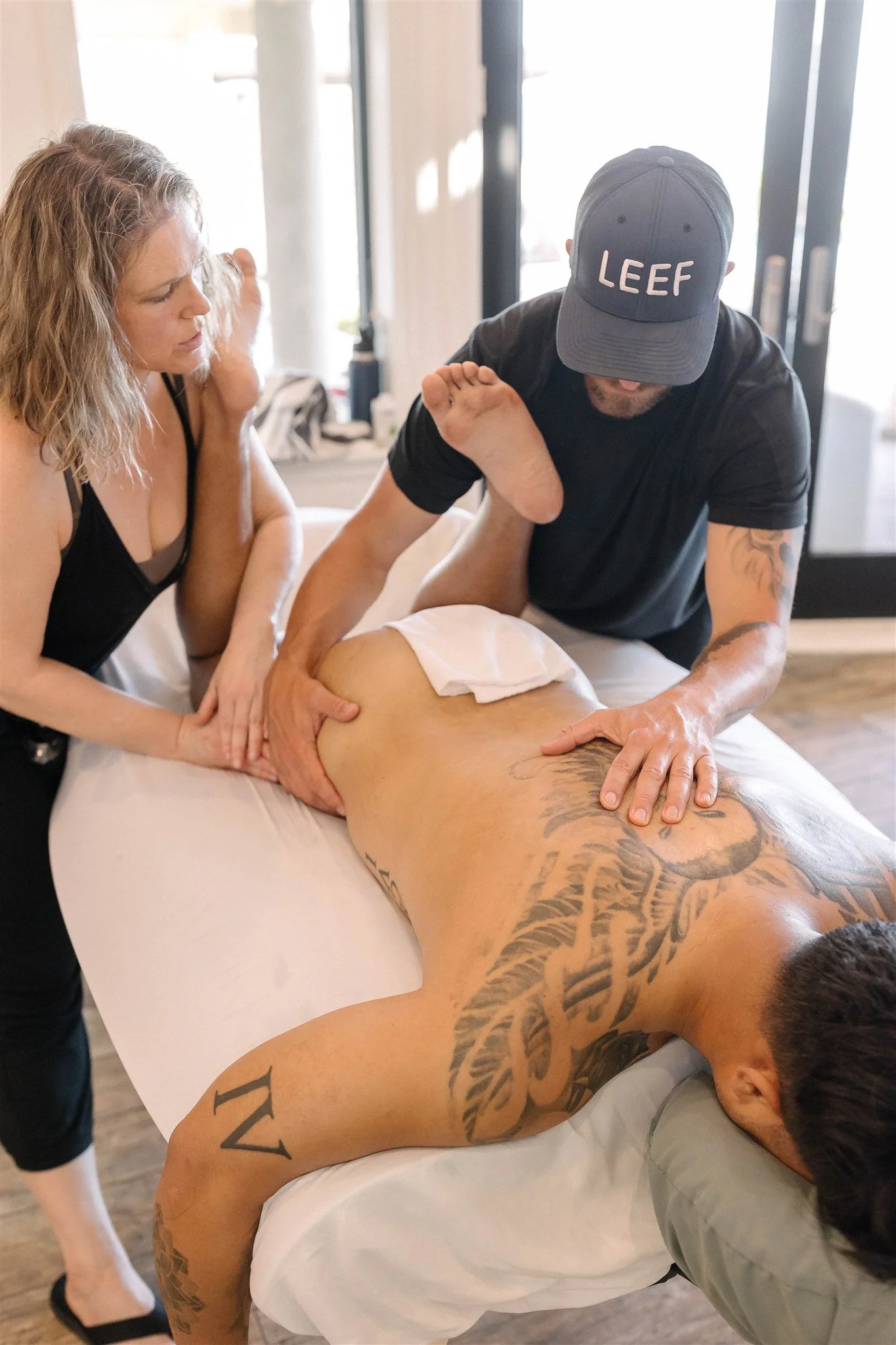
Depth Without Force
Strong therapeutic work delivered with calmness, control, and intention.
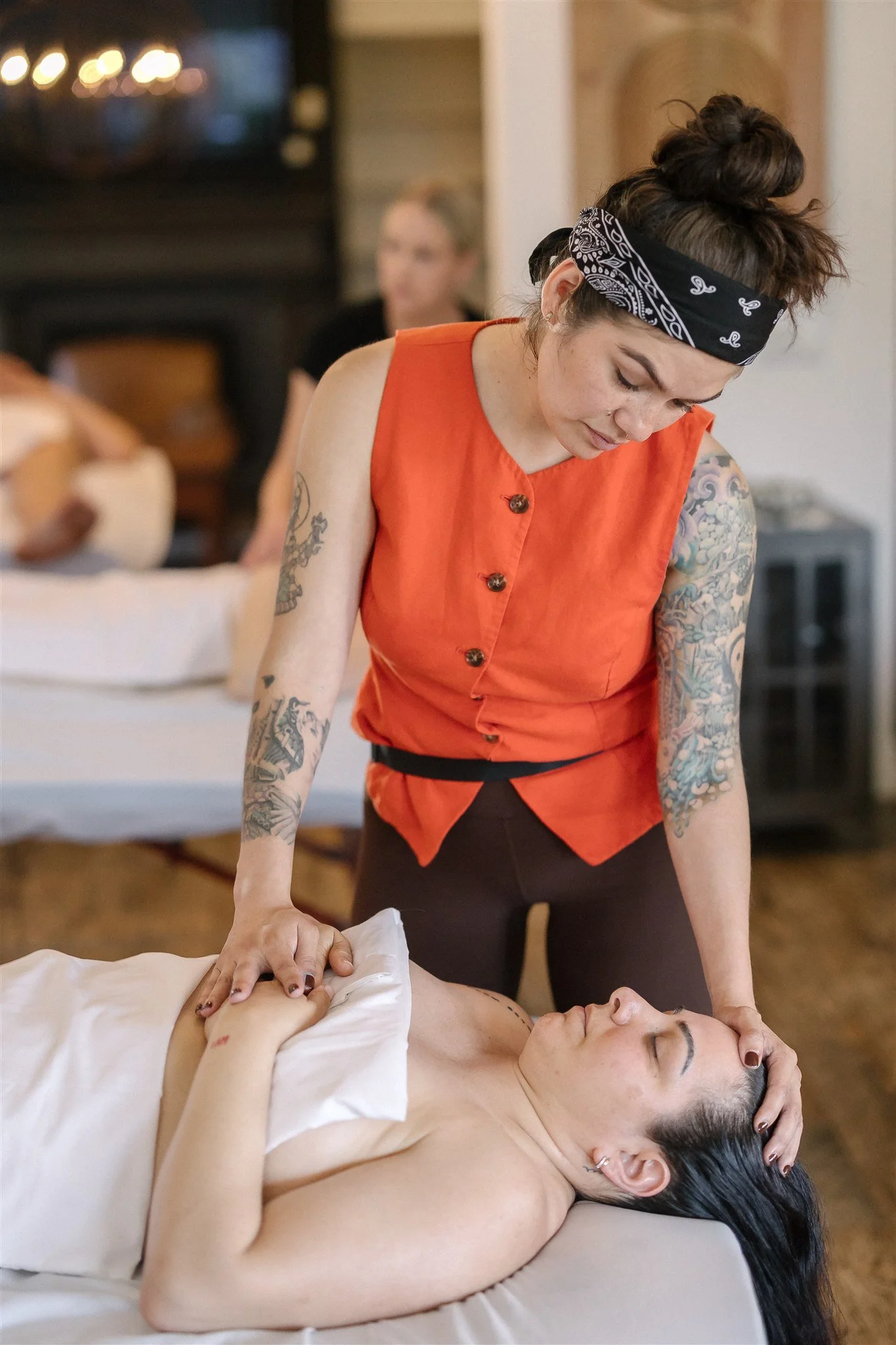
Space for Release
Physical, emotional, and energetic release are welcomed throughout the experience.
The LEEF Method moves differently than conventional massage. We work with the whole body in long, continuous strokes that travel its full length. We use bilateral movements that create a sense of symmetry and wholeness. We use minimal draping not to expose, but to allow — to give the therapist full access to the body as one connected system rather than a series of isolated parts. The work is more intimate than a typical deep tissue or Swedish massage, and more sensual in the truest sense of the word: it engages the senses, slows the nervous system, and invites the client into a deeper relationship with their own body.